


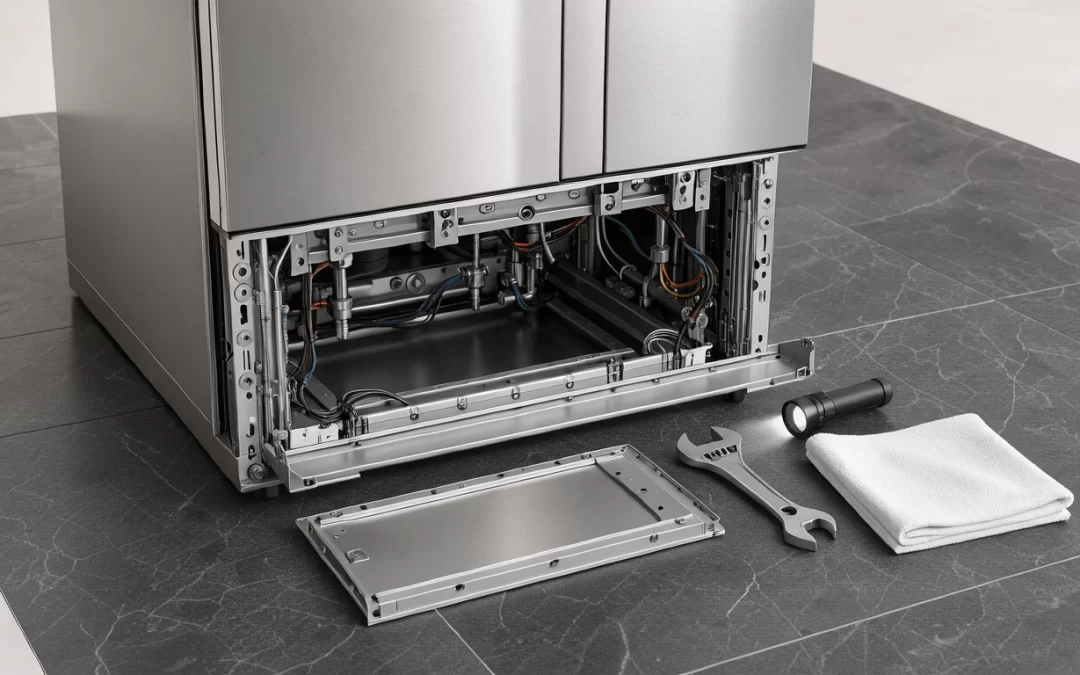
Discovering a dishwasher leaking from bottom panels or pooling across your kitchen floor requires fast action to prevent floor rot and cabinet damage. Water escaping from beneath your appliance usually traces back to a damaged door seal, loose water line connection, clogged drain hose, failed pump seal, or an overfilling tub. In most cases, you can identify the leak within a few minutes by inspecting the front corners and removing the lower kickplate.
Because water and electrical circuits operate closely beneath a dishwasher, always prioritize safety. Before touching hoses, testing switches, or reaching underneath the cabinet, shut off the dedicated circuit breaker in your electrical panel and turn off the hot water shutoff valve beneath the kitchen sink. If you are uncomfortable working with plumbing lines or wiring, consulting a licensed appliance specialist or reviewing guidelines on knowing when to call a professional technician can prevent accidental water damage or electrical hazards.
Immediate First Steps: What to Do When Water Appears
Acting quickly minimizes moisture seepage into subflooring and nearby baseboards. Follow this immediate triage checklist:
- Cancel the wash cycle: Press and hold the “Cancel” or “Drain” button so the unit pumps remaining water out of the basin into the drain line.
- Cut electrical power: Unplug the unit or switch off the circuit breaker. Never step into standing water to reach an outlet.
- Shut off the water line: Turn the hot water shutoff valve under the sink clockwise until tight.
- Soak up pooled water: Use thick towels and set up a box fan or dehumidifier to dry flooring immediately.
- Remove the kickplate (toe kick): Unscrew the access panel at the bottom front of the machine to see whether water is dripping from the door above or pooling internally underneath the motor.
6 Common Causes of a Dishwasher Leaking from the Bottom (and Fixes)
Diagnosing why is my dishwasher leaking underneath comes down to pinpointing whether the drip originates at the door perimeter, the water supply intake, the drainage loop, or the internal motor seals.
1. Worn or Misaligned Door Gasket
If you notice your dishwasher leaking from front bottom corners during the middle of a wash cycle, the perimeter rubber seal is the prime suspect. Over years of heat and detergent exposure, the flexible vinyl or rubber door gasket becomes brittle, tears, or accumulates grease deposits. When the seal loses elasticity, water spraying from the wash arms slips past the seal lip, resulting in a dishwasher leaking from bottom of door edges directly onto the floor.
- The Inspection: Open the door and trace the rubber gasket along the tub channel. Look for cuts, flattened spots, or food buildup. Next, check the lower door sweep gasket along the very bottom edge of the door panel.
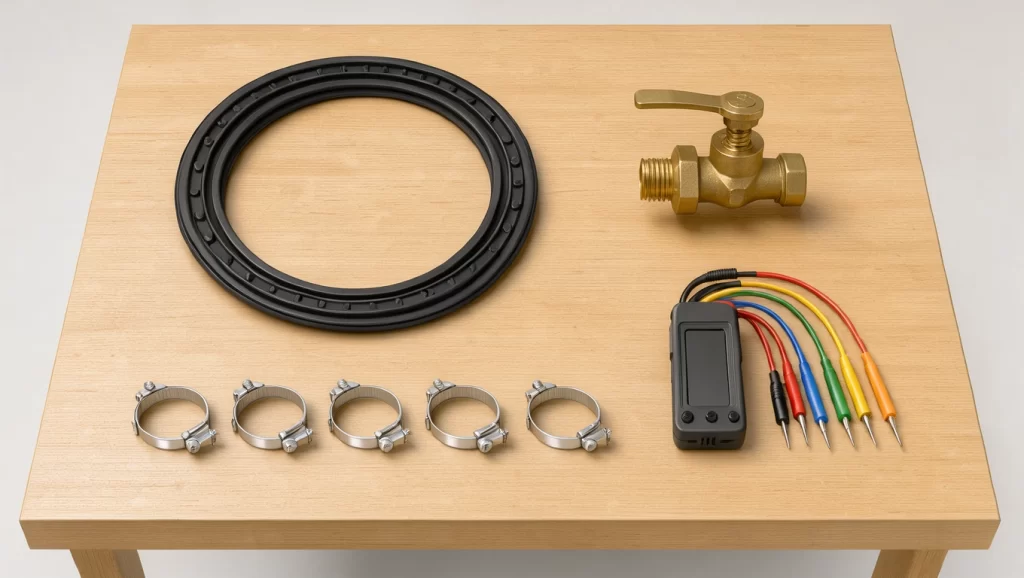
- The Fix: Clean debris with warm soapy water and a soft rag. If the rubber is cracked, complete a dishwasher door gasket replacement. Pull the old seal from its channel, clean out grease with isopropyl alcohol, and press the new gasket firmly into the groove starting at the top center, working down evenly on both sides without stretching the material.
2. Cracked or Leaking Water Inlet Valve
The water inlet valve controls hot water entering the tub from your home plumbing. Located behind the lower access panel on the left or right side, this component features a metal inlet connector, an electric solenoid, and a plastic housing. When the plastic body develops hairline fractures or the internal diaphragm fails, you will see fresh water leaking under dishwasher base pans even when the machine is turned off.
- The Inspection: Remove the lower toe kick with a screwdriver. Shine a flashlight onto the brass or copper fitting and the plastic valve body. Look for active drips, calcification, or green corrosion.
- The Fix: Shut off the water supply and unplug the appliance. Place a shallow pan underneath, disconnect the water line with an adjustable wrench, detach the wiring harness, unbolt the bracket, and install a manufacturer-certified replacement valve. Reconnect fittings securely using Teflon thread tape on threaded plumbing joints where specified.
3. Detergent Oversudsing
A sudden pool of soapy foam spreading across the floor indicates you have a dishwasher leaking soap suds onto floor surfaces. Using standard liquid hand soap, non-dishwasher liquid dish soap, or using an excessive quantity of concentrated liquid rinse aid creates massive foam. Dishwasher pumps cannot move aerated foam; the suds push past water seals and bubble straight over the lower door lip.
- The Inspection: Open the door mid-cycle. If a dense wall of white foam fills the lower tub up to the door opening, oversudsing is your sole problem.
- The Fix: Cancel the cycle to drain liquid. Scoop out as much foam as possible. Pour 1/2 cup of cooking oil or whole milk into the tub base, as fats instantly collapse soap suds. Run a short rinse cycle without detergent to flush the tub clean. Instruct everyone in your household to use only automatic dishwasher tablets or powders.
4. Damaged Pump Seal or Motor Housing
Located directly in the center of the underside pan, the circulation and drain pump assemblies move gallons of pressurized water through the spray arms. A dishwasher pump seal leak occurs when internal rubber O-rings degrade over time or become cut by broken glass fragments that slip through the filter. This produces constant, slow pooling in the center undercarriage whenever the motor spins.
- The Inspection: Run a short test cycle with the bottom toe kick removed. Watch the central motor shaft using a work light. Look for droplets leaking around the motor impeller shaft or pump housing seams.
- The Fix: Depending on the appliance model, you can either disassemble the pump to install a new shaft impeller seal kit or replace the pump and motor assembly as a complete unit. Because this requires dropping the pump housing and securing internal clamps, homeowners seeking comprehensive guidance on mechanical systems can refer to our dishwasher troubleshooting guide.
5. Loose or Cracked Drain Hose and Clamps
After wash cycles finish, dirty water routes through a ribbed plastic drain hose beneath the appliance, running either through an air gap, a high loop, or directly into a garbage disposal connection. Constant thermal expansion, pump vibration, and shifting can loosen the spring-tension clamps or cause the plastic hose to rub against cabinet edges, creating pinhole punctures.
- The Inspection: Trace the ribbed hose from the bottom drain pump port back toward the sink cabinet cutout. Feel along the corrugated plastic for moist areas, and inspect the rubber coupler boots at both connection points.
- The Fix: Tighten any loose worm-gear clamps with a nut driver. If the plastic hose itself is split, replace the entire drain line with a heavy-duty, high-loop rated discharge hose. Ensure the hose arches up higher than the sink drain level to prevent dirty backflow into your appliance.
6. Defective Float Switch or Stuck Float Assembly
The float assembly regulates the maximum water depth inside the tub. As the water fills, a plastic cylinder rises along a guide stem; once water reaches the proper height, it trips an electrical microswitch to stop filling. If foreign debris jams the float downward, or if the switch contacts weld shut, water will continue filling until it overflows the front bottom baffle.
- The Inspection: Lift the plastic float located in the front corner of the tub interior. It should click crisply and drop freely under its own weight without sticking. Test the switch beneath the tub with a digital multimeter for electrical continuity.
- The Fix: Clear out accumulated lime, seeds, or pet hair around the float column. If the switch remains non-responsive during electrical testing, unclip the switch from the underside mounting bracket and install a replacement unit.
Diagnostic Comparison: Leaks and Recommended Solutions
To help you determine how to fix a leaking dishwasher quickly, review this comparison of leak locations, symptoms, and repair difficulty:
| Leak Location | Primary Cause | Typical Symptoms | DIY Feasibility |
|---|---|---|---|
| Front corners of door | Perimeter gasket failure or tub misalignment | Dripping during mid-cycle spray cycles | Easy (30 minutes) |
| Front bottom center | Excess suds or stuck overfill float | Foamy water overflowing front threshold | Easy (15 minutes) |
| Directly beneath water connection | Water inlet valve body cracked or loose fitting | Drips constantly, even when unit is turned off | Moderate (45 minutes) |
| Center undercarriage | Pump impeller seal or motor housing leak | Dripping strictly during wash/drain cycles | Advanced (1 to 2 hours) |
| Rear underside / cabinet wall | Punctured drain hose or failed clamp | Water surges out during pump drain phase | Moderate (45 minutes) |
Preventing Future Dishwasher Leaks
Routine care goes a long way toward protecting your kitchen subfloor from silent moisture damage. Keep these habits part of your routine kitchen appliance maintenance:
- Clean the filter monthly: Remove bone fragments, toothpicks, and seeds from the sump filter so hard debris cannot enter the pump seal cavity.
- Wipe down the door gasket: Clean the rubber seals and the bottom tub lip once a month with white vinegar or mild dish soap to remove grit that compromises watertight contact.
- Avoid dish soap contamination: Never pre-wash dishes with standard sink soap unless you rinse them thoroughly before placing them inside the racks.
- Check cabinet connections annually: Inspect the shutoff valve, supply line braid, and drain connection under your sink for signs of dampness or loose clamps.
Frequently Asked Questions
Why is my dishwasher leaking from the bottom only when running?
Leaks that occur exclusively while the appliance is running indicate issues with dynamic water movement: a compromised pump seal, split spray arm diverting water past door gaskets, loose drain hose clamps, or an overfilling tub caused by a stuck float assembly.
Can a cracked spray arm cause a dishwasher to leak from the bottom of the door?
Yes. A cracked or seam-split plastic spray arm forces a direct, high-pressure sheet of water downward against the lower door seal rather than rotating gently. Lower door seals are designed to repel falling water and mist, not direct high-pressure jets, resulting in front leaks.
Is it worth fixing a leaking dishwasher or should I replace it?
If the leak stems from a door gasket, drain hose, float switch, or water inlet valve, DIY repair parts generally cost under $50, making fixing it highly economical. However, if an appliance older than 10 years suffers a cracked tub basin or complete motor assembly failure, replacing the machine is usually more cost-effective.
Why is water pooling under the dishwasher when it is turned off?
If water leaks underneath while the unit is completely powered off, the problem lies on the pressurized intake side—either a cracked water inlet valve housing or a loose water supply line connecting your household plumbing to the appliance.
Conclusion
A leaking dishwasher rarely fixes itself, but identifying the problem does not require complex tools. Start by examining the door gasket and checking for oversudsing, then remove the front kickplate to check the water inlet valve, drain hose, and central pump. Addressing small leaks promptly preserves your kitchen flooring, protects your cabinetry, and ensures your appliance runs safely and efficiently for years to come.